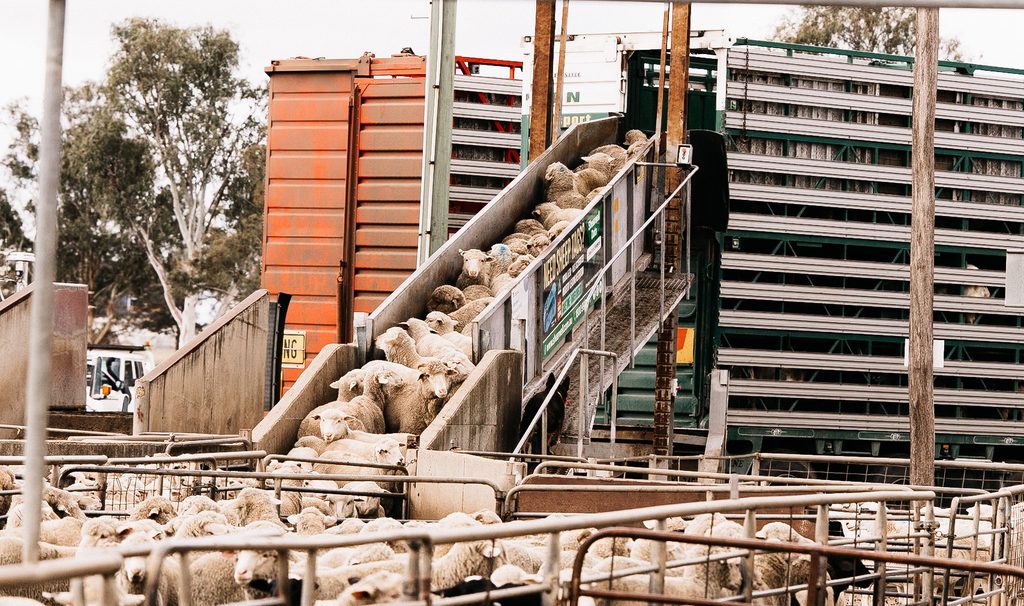
Photo courtesy of Dubbo Regional Livestock Markets
When livestock needs to move, finding the right truck can take time. You may need to call through your usual contacts, explain the same job more than once and wait to find out who is available.
The problem is not always that there is no truck. A truckie may already be travelling nearby, heading in the right direction or looking for a suitable job for the return trip. The real problem is that the producers and the truck drivers may not know about each other.
That is the gap StockShift is designed to close.
A large industry still relies on individual connections
Livestock transport is a major part of Australian agriculture. Meat & Livestock Australia reports that around 40 million sheep, cattle and goats are transported across Australia each year.
Every movement takes coordination. The livestock, pickup, destination and timing all need to be clear, while the operator needs the right truck and enough capacity for the job.
For many livestock producers, the starting point is still their own contact list. Trusted relationships will always matter in agriculture, but relying only on individual phone calls can make it difficult to see who else may be available.
An operator outside your usual network might already have room on a truck. Without a shared place for that opportunity to be seen, the job and the available capacity can easily miss each other.
Make the job visible
StockShift gives livestock producers another way to start the conversation.
Instead of the job only existing in separate phone calls, producers can post the livestock movement on the platform. Relevant registered freight operators can then see the opportunity and decide whether it may suit their route, timing and truck.
Posting a job does not remove the need for a proper conversation. The producers and truck drivers still connect directly to discuss the movement, confirm the details and decide whether the job is suitable.
What changes is visibility. More of the right people have an opportunity to see that the job exists.
What producers can include in a job post
Clear information helps operators understand the opportunity sooner. A useful job post should include:
- Pickup area
- Destination
- Type and number of livestock
- Preferred timing
- Any important access or loading details
The clearer the information, the easier it is for an operator to work out whether the job may fit their movements.
A posted job can help more than one business
Posting a job is not only about finding transport for your own livestock. It also creates a visible work opportunity for truck drivers.
A truckie may be finishing another movement nearby. They may have space available, or they may be planning the return leg of a trip. Seeing your job could help them consider a more productive next movement instead of travelling part of the way empty.
There is no guarantee that every job will match immediately, and producers should still allow enough time to organise transport. But every job posted adds another opportunity to the network.
A simpler place to begin
StockShift does not replace the relationships that keep the industry moving. It supports them by giving producers and truck drivers another way to find one another.
If you have livestock ready to move, sign up to StockShift and post the job. Your next transport connection may already be on the road.